




Wednesday, 30 September 2026 10:00 PM
Environmental, Social and Governance
Article Repeats Unproven Claims Without Explaining Where They Exceed the Scientific and Regulatory Record
WASHINGTON, D.C. / ACCESS Newswire / September 30, 2026 / The Washington Post on September 27 published a story by Mark Robichaux under the headline "Ospreys are disappearing along the East Coast. Scientists think they know why."
The osprey breeding failures reported in the story are serious and warrant further study. The reporting, however, repeatedly places the commercial menhaden fishery at the center of a causal question that the scientists themselves say remains unresolved, while omitting key details on menhaden management and the fishery's economic impact.
The article does acknowledge that Dr. Bryan Watts of William & Mary's Center for Conservation Biology describes the evidence as an association rather than proof that commercial menhaden harvest caused osprey nesting failures. That critical limitation should have guided the rest of the account.
The headline blurs what scientists know and what remains uncertain
Researchers have identified food stress as the immediate cause of many Chesapeake Bay osprey nesting failures. They have also associated that food stress with reduced delivery of menhaden to some nests. But the Center for Conservation Biology says the underlying causes of reduced menhaden availability are not clear. It lists commercial harvest as one possible factor, alongside climate change, changing distribution and delayed entry of forage species into the Bay. The headline attempts to draw in readers on a false premise.
The distinction is even more important beyond the Chesapeake. In its 2026 compilation of monitoring from 65 study areas, the center says the underlying cause of low reproductive performance at other Atlantic Coast sites is less clear. It says, "we should view ospreys as sentinels for the marine ecosystem rather than a species imperiled." It also states, "ospreys appear to be secure throughout much of their range but are struggling within some coastal sites." The Post's coastwide headline is broader than those findings.
The article treats an unmeasured Bay-wide condition as a premise
The story states, without attribution, that menhaden are not present when birds and fishermen need them. Researchers have documented reduced menhaden deliveries at some osprey nests, and fishermen describe difficulty finding dependable concentrations in some locations, while abundant concentrations are observed elsewhere and mass fish kills involving mostly juvenile menhaden have occurred in North Carolina. Those contrasting observations do not measure adult menhaden abundance throughout the Chesapeake Bay or establish a uniform coastwide shortage.
The article also calls menhaden the principal prey of Chesapeake ospreys. Menhaden are an important prey species, particularly in saltier parts of the Bay, but the peer-reviewed study cited in the story says osprey diet composition shifts with salinity: pairs in higher-salinity waters appear to rely on menhaden, while pairs in low-salinity waters depend primarily on catfish and gizzard shad. A USGS study of osprey diets across Chesapeake Bay sites and a USGS presentation to the Atlantic States Marine Fisheries Commission (ASMFC) summarizing the site-specific results provide the underlying geographic detail. Catfish and gizzard shad accounted for 77 percent and 20 percent of the diet reported for the Susquehanna, respectively, and 52 percent and 28 percent in upper-Bay estuarine areas. At Poplar Island, striped bass accounted for 48 percent and menhaden 44 percent; in lower-Bay estuarine areas, spotted seatrout accounted for 29 percent and menhaden 24 percent. Those data do not support a single Bay-wide description of menhaden as the principal prey.
The 2026 peer-reviewed osprey study says there is no fishery-independent monitoring of adult menhaden in the Bay. According to the authors, that information gap prevents a direct assessment of the relationship between local menhaden abundance and osprey reproduction. They also say the effect of harvest on adult menhaden abundance in the Bay remains unresolved.
The Louisiana passage leaves out regulatory and scientific context
The article also turns to Louisiana's separate Gulf menhaden fishery. It reports the 2023 net failures and later enforcement improvements, but omits existing rules governing coastal buffers, release reporting, gear retrieval, vessel tracking and penalties. Following those incidents, the fishery also moved toward stronger purse seine nets and standardized improved bycatch excluder devices intended to keep larger fish out of the pumping system.
Robichaux also omits the Louisiana wildlife agency's summary of a state-commissioned, season-long study of the 2024 fishery, which estimated total bycatch at approximately 3.6 percent of catch by weight. In its 2015-2024 comparison, the agency reported that dead menhaden fishery bycatch accounted for 9.9 percent of red drum removals by weight and 2.7 percent of spotted seatrout removals; directed recreational anglers accounted for the remainder, 90.1% and 97.3%, respectively. The aggregate rate does not resolve every species-specific concern, but the results are material context for evaluating the fishery.
Claims from advocates and fishermen are observations and policy positions
Robichaux quotes Virginia Saltwater Sportfishing Association chairman Steve Atkinson asserting that the Bay no longer contains enough menhaden to support the current reduction fishery and a healthy ecosystem. While there is little doubt that Atkinson made that statement, the scientific record cited in the story does not establish it, and it is presented without challenge.
The ASMFC's Chesapeake work group expressly did not determine whether the supply of menhaden is sufficient to meet predator demand in the Bay. Nor has the commission determined that a 50 percent reduction in the Bay cap - the policy Atkinson supports - would improve osprey reproduction. The range from no reduction through 50 percent consists of management options under consideration, not measured biological remedies. At no point has the ASMFC provided any scientific rationale for a reduction in the Bay harvest.
Anecdotal accounts like charter captain Chris Newsome's about difficult fishing deserve to be heard, but Robichaux takes that one named Chesapeake captain's experience and turns it into an unsubstantiated coastwide conclusion. The story cites no coastwide survey, abundance index, standardized fishing data, additional named fishermen or geographic examples to support its assertion that anglers and fishermen throughout the Atlantic Coast are seeing the same pattern. An unspecified collection of anecdotes is not evidence of a coastwide biological trend. By presenting it that way, Robichaux seeks to create the appearance of broad corroboration while giving readers no way to assess how many people were consulted, where they fish or whether their experiences are representative.
The article omits important evidence of sustainable management
Robichaux reports that the Atlantic States Marine Fisheries Commission finds Atlantic menhaden not overfished, with overfishing not occurring, but he does not tell readers that the ASMFC already uses ecological reference points designed to account for menhaden's role as prey or that it reduced the coastwide catch limit by 20 percent for 2026. It also omits that the U.S. Atlantic menhaden purse seine fishery is certified by the Marine Stewardship Council, following independent assessment against the MSC Fisheries Standard.
The economic figures are not comparable measures
The article compares an estimated $804 million spent on Atlantic recreational fishing trips involving menhaden with roughly $300 million in reported annual sales from Omega Protein's combined Atlantic and Gulf operations and approximately 260 direct Virginia jobs reported by the companies in the Atlantic menhaden fishery. But it does not explain that the ASMFC's 2026 Committee on Economics and Social Sciences review expressly describes historical modeling showing that direct harvesting and processing jobs sustain additional non-fishing employment in mechanics, logistics and local services including fuel and lubricants, repairs and maintenance, shipping, vehicle operations, supplies and food, utilities and telephone service, insurance and security, real estate rent, county property taxes and healthcare benefits.
But when it came to the recreational fishing contribution, the story cited a Southwick Associates study commissioned by the Theodore Roosevelt Conservation Partnership that casts a very wide net in its economic assumptions, counting all tangential spending on entire fishing trips on which an angler used menhaden as bait, chum or scent. This means they counted anything including transportation, fuel, food, hotels and other purchases as an economic contribution of recreational fishing.
In short, the story's comparison of the industries' economics is apples and oranges.
Robichaux mentions the direct Virginia jobs but says nothing about the workers who hold them. UFCW Local 400 says Ocean Harvesters' crews are overwhelmingly local and unionized and that the operation employs one of the largest minority workforces in Northumberland County. The union has documented collectively bargained increases in base pay, incentive rates and bonuses, as well as health-and-welfare benefits. These are family-supporting union jobs that provide strong wages and full benefits to workers, including many without college degrees - opportunities that no other employer in the Northern Neck provides on a comparable basis. The bigger issue remains that the article never illustrates how a reduction in the Bay Cap would benefit recreational anglers, but reductions would almost certainly result in economic harm to menhaden fishermen and their families.
The ASMFC's Committee on Economics and Social Sciences identifies the reduction industry as an important part of the Reedville-area economy. It also warns that high fixed costs mean a small reduction in fishing quota could cause larger unemployment effects. That analysis is relevant to any discussion of workers and communities affected by additional restrictions.
The ASMFC's economic advisers warn that job losses in the reduction sector could be lasting because comparable work may be hard to find locally.
The Southern Christian Leadership Conference raised that concern directly with Maryland Governor Wes Moore. SCLC urged Maryland to consider how additional restrictions could disproportionately affect African American workers, union families and rural communities, and to weigh environmental stewardship together with economic justice and the consequences for workers and their families. Robichaux does not mention the union workforce or the civil rights organization's intervention.
The February 18 letter does not show opposition to research
Robichaux introduces a February 18, 2025 letter from an industry government relations professional to Virginia Del. Betsy Carr and then immediately quotes Chesapeake Bay Foundation executive Chris Moore alleging that the industry is using scientific uncertainty to stall restrictions. CBF has repeatedly used this letter out of context to allege that the industry opposed research funding.
The companies explained to Robichaux that by February 18, the General Assembly was no longer considering the roughly $2 million needed for the full study; discussion had shifted to whether a reduced amount of funding could support useful interim work. The letter responded by proposing a two-year pilot to test aerial and hydroacoustic survey methods that had not yet been validated for estimating Chesapeake Bay menhaden abundance. It also called for a plan and budget for a peer reviewed research program and, as an alternative, recommended returning to the General Assembly in 2026. Read in full and in context, it proposed research under constrained funding and raised concerns about methodology.
What followed after February 2025 undercuts CBF's characterization. When the 2025 Virginia session ended without funding the proposed comprehensive study, industry participants helped fund a Science Center for Marine Fisheries research roadmap involving VIMS, the University of Maryland Center for Environmental Science and NOAA; supported a tagging feasibility study; and opened commercial vessels and processing operations to researchers. That record is inconsistent with Moore's false claim about the industry's motive.
The research effort gained substantial public funding in 2026: Virginia committed $2 million over two years, and Congress appropriated $2.5 million for Bay-specific research.
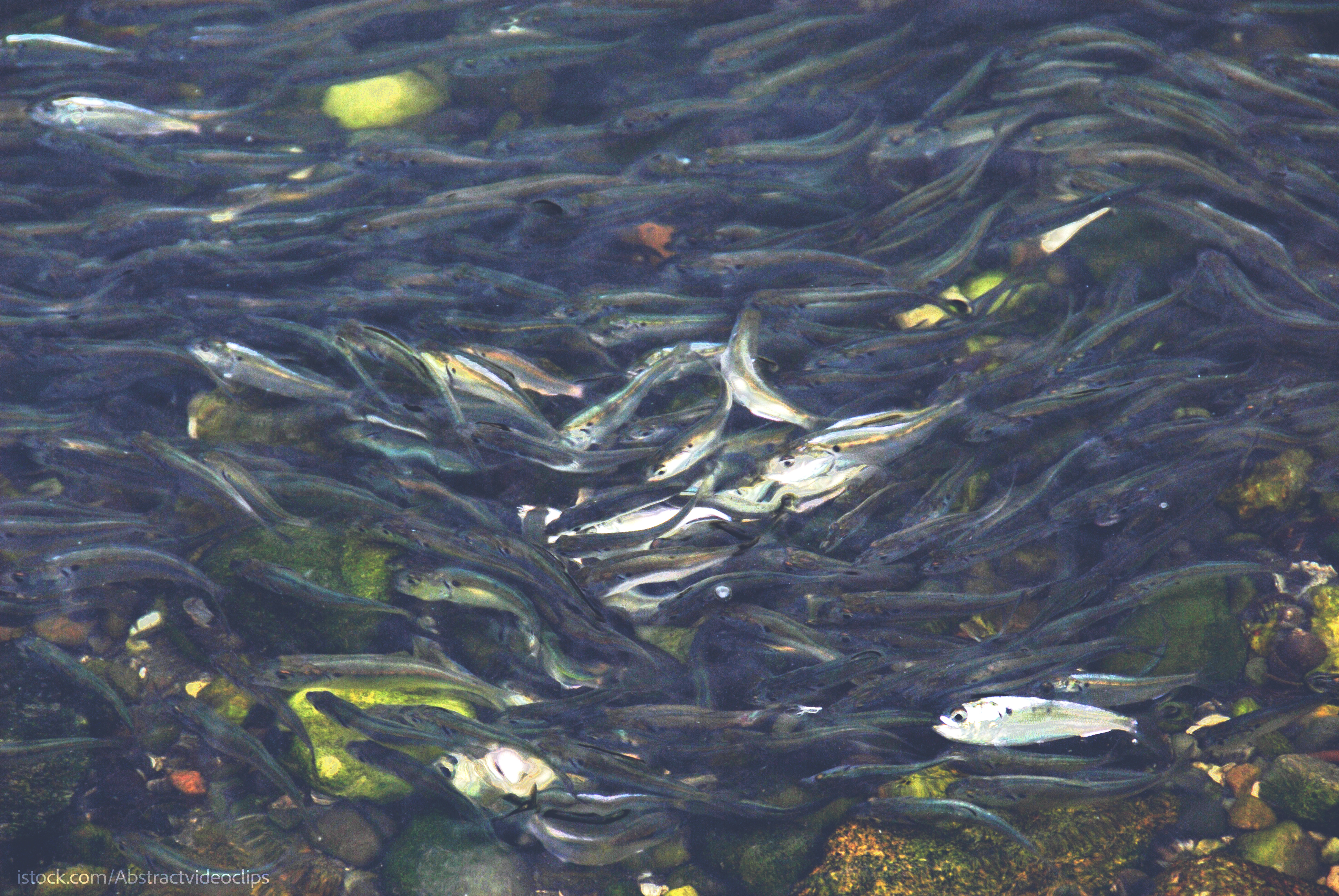
Commercial menhaden fishermen and processing workers support coastal communities and supply fishmeal, fish oil, nutritional products and bait to recreational and commercial fishermen from Maine to Louisiana. They deserve coverage that distinguishes observed osprey food stress from an unproven allegation of fishery causation, and that compares harvest and economic figures on an accurate basis.
Sources and documents cited
1. The Washington Post article addressed in this release, September 27, 2026.
2. William & Mary Center for Conservation Biology, 2026 Chesapeake Bay osprey breeding results and Atlantic Coast monitoring summary.
3. Peer-reviewed 2026 osprey study.
4. U.S. Geological Survey, Chesapeake Bay osprey diet study; USGS presentation to ASMFC, August 2024.
5. ASMFC, Chesapeake Bay Menhaden Work Group report, April 2025; Atlantic menhaden FAQs; and 2026 catch-limit announcement.
6. Marine Stewardship Council, U.S. Atlantic menhaden purse-seine fishery listing.
7. Louisiana Department of Wildlife and Fisheries, 2026 commercial fishing regulations and summary of the 2024 menhaden bycatch study.
8. ASMFC Committee on Economics and Social Sciences, updated employment and economic review, July 2026.
9. Southwick Associates, Atlantic menhaden recreational-fishing economic report, June 2026.
10. UFCW Local 400, menhaden workforce account and collective-bargaining announcement.
11. Southern Christian Leadership Conference letter to Maryland Gov. Wes Moore.
12. February 18, 2025 letter to Virginia Del. Betsy Carr and the Chesapeake Bay Foundation's statement discussing the research dispute.
13. Virginia Institute of Marine Science, Atlantic menhaden research and funding overview.
About the Menhaden Fisheries Coalition
The Menhaden Fisheries Coalition (MFC) is a collective of menhaden fishermen, related businesses, and supporting industries. Comprised of businesses along the Atlantic and Gulf coasts, the Menhaden Fisheries Coalition conducts media and public outreach on behalf of the menhaden industry to ensure that members of the public, media, and government are informed of important issues, events, and facts about the fishery.
Press Contact
Menhaden Fisheries Coalition
(202) 595-1212
www.menhaden.org
SOURCE: Menhaden Fisheries Coalition